3Keel’s report for WWF-UK explored how changing the way we feed livestock could have big implications for how we use land in the UK.
Growing cereal crops to feed animals uses 40% of the UK’s arable land area – around 2 million hectares – and consumes half of our annual wheat harvest, the nation’s most important staple crop. This is in addition to an estimated 850,000 hectares of land abroad, just for the soy fed to UK livestock.
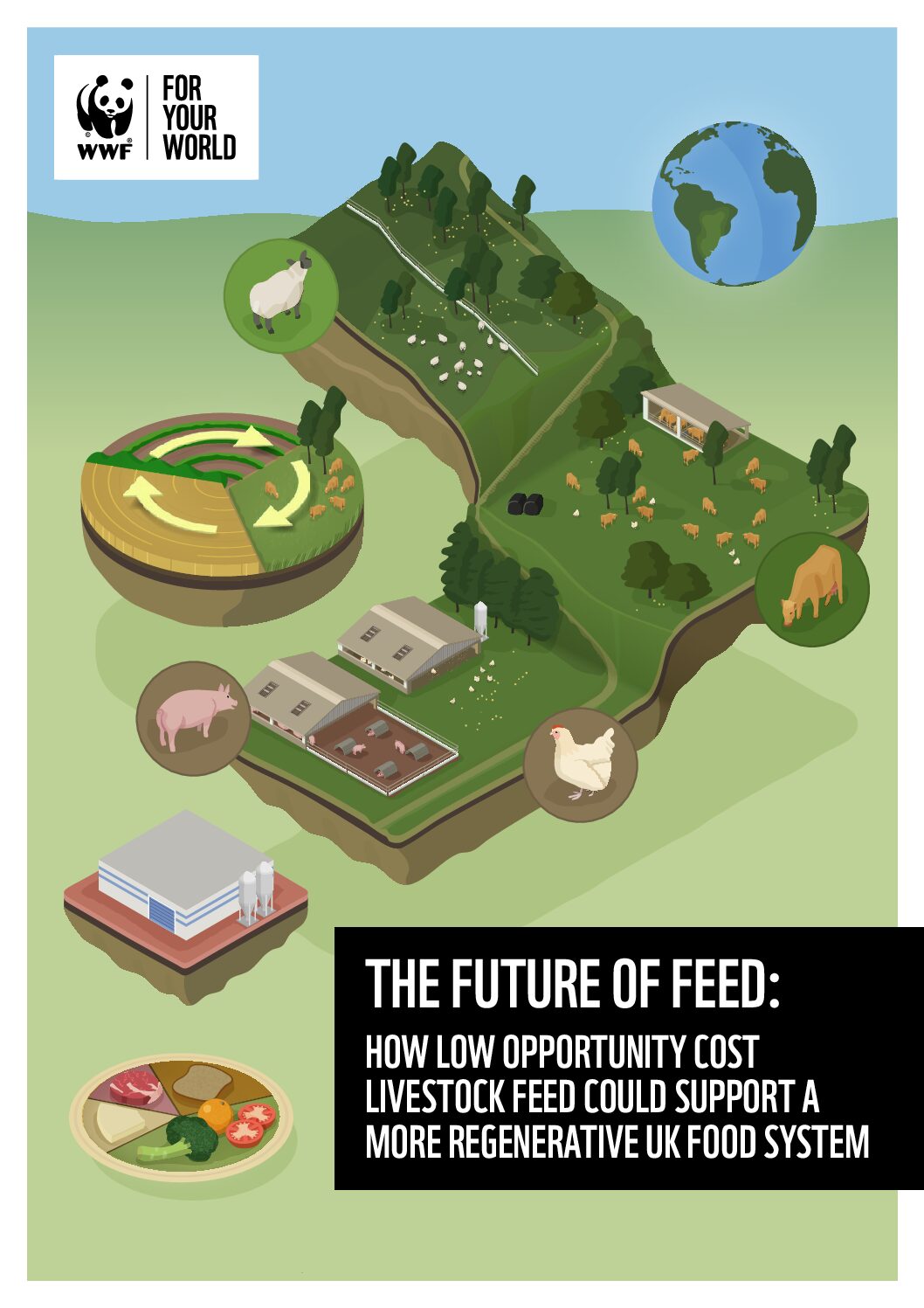
3Keel was commissioned by WWF to research the opportunity to feed our livestock differently. The final report, ‘The Future of Feed: How low opportunity cost livestock feed could support a more regenerative UK food system,’ outlined a potential future in which livestock consume only feed from sources that do not compete with human nutrition. This includes grass, food waste, and food industry by-products. Such a system would allow more arable land to be used to produce food for direct human consumption, with more calorically efficient results – on one estimate, if all edible crops were consumed by humans instead of being fed to livestock, enough extra calories would be available to feed an additional 4bn people globally.
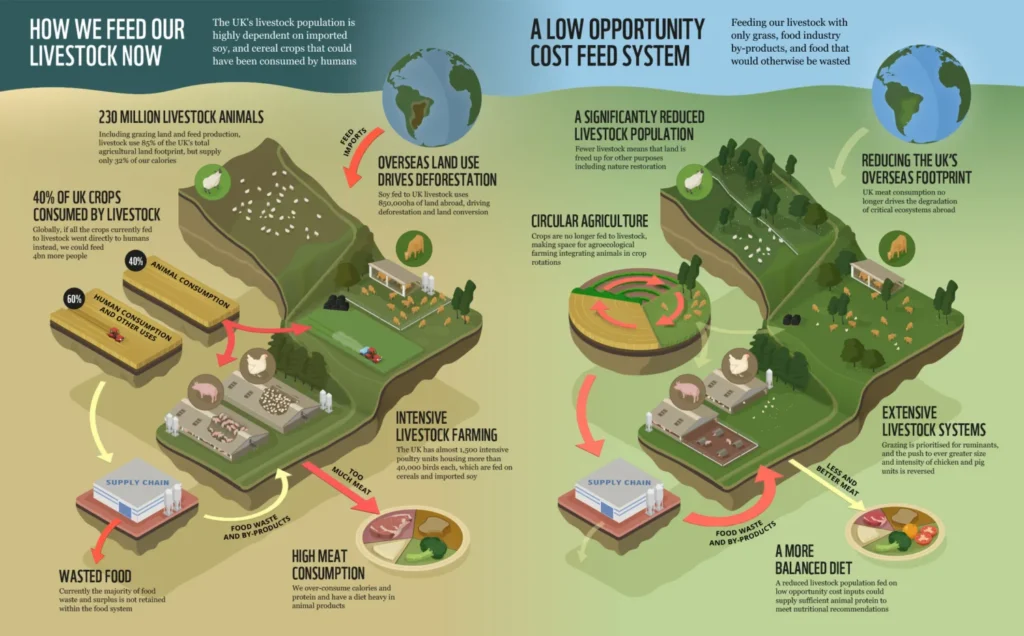
While the UK has an abundant grass resource suited to feeding ruminant animals, low opportunity cost feed sources suited to pigs and poultry are far more limited. This would mean that the number of animals supported by a low opportunity cost feed system would be far lower than today. But our research found that even this reduced availability of meat, dairy and eggs would likely still be enough to fulfil internationally recognised recommendations for healthy diets. This is in part because in the UK we currently over-consume calories, protein and animal-source foods. Our remaining protein requirements could be met by plant-based foods, with only a proportion of the land previously used for animal feed needed to grow additional plant protein. The rest would be freed up for other uses.
While many questions remain, the report clearly demonstrated the potential benefits that could come from significantly decreasing cereals and soy in livestock feed and prioritising animal nutrition from low opportunity cost sources. This work received wide coverage in the media including Channel 4 News, BBC Radio, Evening Standard, Farmers Guardian, Business Green and the Grocery Gazette.