A new 3Keel report clearly illustrates that legislation is essential to ensure a level playing field and enable companies to achieve deforestation-free supply chains. Released today, 2025: a milestone year? lays out insights from nearly a decade of assessing progress in palm oil, soy and cocoa supply chains.
The study, produced by 3Keel, is based on the data gathered as part of the annual collective commodity reporting programme we run each year. The programme, which spans the retail, food service, and manufacturing sectors, collects data from suppliers relating to palm oil, soy, cocoa and coffee supply chains.
In 2025, 20 companies participated to map their supply chains, from Aldi, Co-op and Holland & Barrett through to McDonalds, Samworth Brothers and Waitrose.
This year’s report indicates a clear need for a new approach to drive further progress in deforestation-free supply chains. It provides valuable insights into how businesses are approaching responsible sourcing for palm oil, soy and cocoa, and it demonstrates that the industry needs coherent sector-wide approaches to move forward.
Sian Allen, Programme Lead
2025: a milestone year?
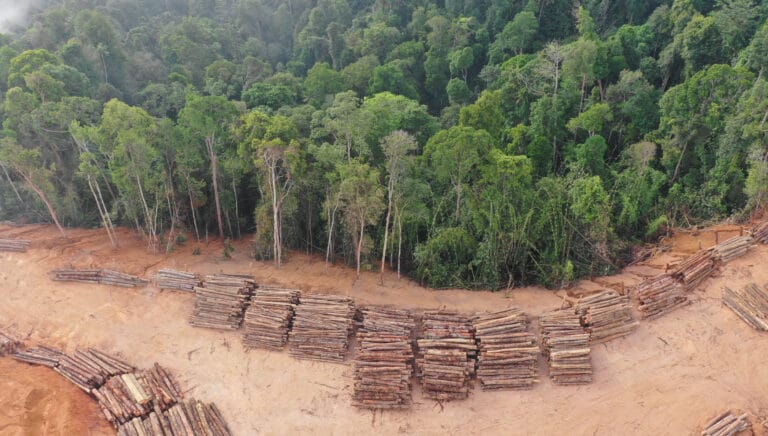
For forest-risk commodities, 2025 was to be a milestone year. Many companies set it as their target for achieving fully verified deforestation- and conversion-free sourcing.
The publication of today’s report marks the ninth year we’ve conducted our collaborative data collection initiative. Over this time, some companies have clearly made meaningful progress. However, critical gaps still hinder full alignment with deforestation- and conversion-free goals, meaning the ‘milestone’ year failed to deliver sufficient progress.
Why read the report?
Despite the lack of sufficient progress overall, there are causes for optimism. Some parts of the supply chain have moved further and faster to show what is possible. In other areas, the report demonstrates that voluntary approaches are reaching their limit, and that regulation is critical.
This year’s commodity reporting programme saw particularly high engagement rates. More than 1,600 suppliers responded with detailed information about the commodities they source and the policies they have in place. Over nine years of reporting, transparency is improving and the consistency of supply chain data requests (e.g. through this joint annual process) has steadily increased the quantity and quality of data available.
The data shows that companies are exploring different options to achieve more sustainable supply. Although the 2025 targets were missed, companies continue to explore routes to achieve the ambition – such as shifting sourcing regions, pursuing novel approaches to improve their supply chain data, investing in landscapes, and exploring substitution options. Find out more in ‘2025, a milestone year?‘
What are the key takeaways?
- Despite strong engagement, companies did not achieve their 2025 ambitions.
- Downstream actors still lack a clear view of the supply chain.
- Product groups within supply chains have moved at different rates.
- Companies are exploring or using a range of strategies to secure sustainable supply.
- Commitments to vDCF have stalled, indicating a need for new tools.
- A core group of key suppliers drive much of the outcome.
I’d like to thank all the companies who participated in this year’s reporting programme. High engagement rates made the 2025 data collection initiative particularly robust. Looking ahead, we’re actively welcoming new participating companies and encouraging them to get in touch and learn more about next year’s data collection initiative.
Sian Allen
What does the report recommend?
Based on the data we collected in 2025 and the previous eight years, we have recommendations for four key groups:
- Companies with vDCF commitments should renew their focus on the performance of key suppliers, align on sector expectations for more consistent supplier requests, and support targeted investment in production regions to build resilience and traceability.
- Governments should act to enforce legislation for traceable and deforestation-free supply chains without further delay, recognising that parts of the supply chain will not make progress until data-sharing and monitoring become mandatory requirements.
- Suppliers should follow through with establishing clear policies across all customers and embedding these as procurement controls to drive progress through the supply chain.
- Industry associations should support sector-wide efforts to improve monitoring and reporting, reducing the burden on individual companies and sending a harmonised signal on ambition
Based on the findings of the report, we recently ran a webinar to explore the persistent challenges that retailers, food service providers, manufacturers and their suppliers still face. A hands-on session, it was a great opportunity to unpick the findings from this year’s data collection programme while exploring practical solutions.
You can watch the webinar recording here.
For more information about our collective commodity reporting programme – including how to join next year’s process – please get in touch at commodities@3keel.com.