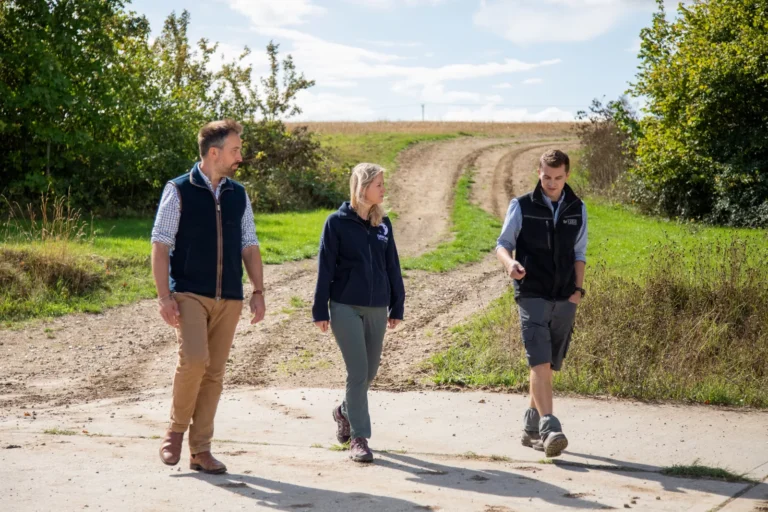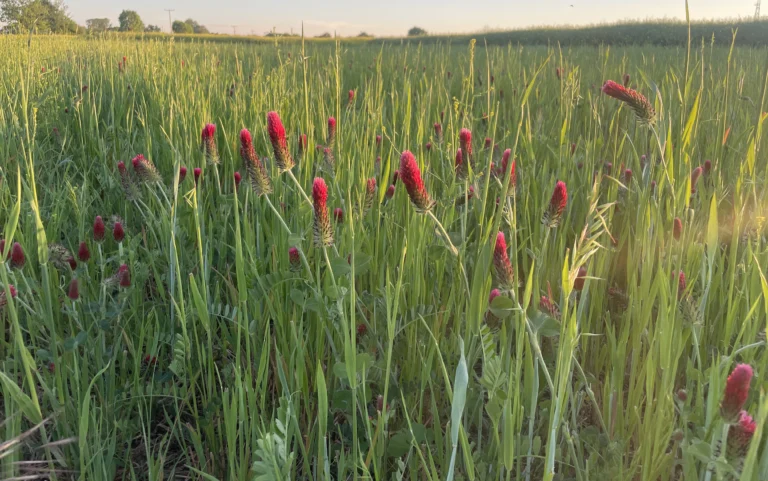
3Keel’s Agriculture & Landscapes team delivers practical and strategic support to improve resilience and productivity in supply chains and landscapes. And with projects past and present spanning Cool Farm Alliance, Natural England and WWF, their expertise is grounded in hands-on experience in agriculture.
But how exactly does this help day to day? We wanted to find out how their previous roles in agriculture prove useful at 3Keel, plus how they’re able to successfully connect agricultural ‘know-how’ with a wealth of supply-chain expertise.

Catherine McCosker, Head of Agriculture & Landscapes
“As a former farmer, I’m passionate about amplifying the farmer voice within supply chains.
“I’m particularly interested in farmer engagement and support, soil health and regenerative agriculture, and nature-based solutions in an agriculture and production context.”

Russell Ashfield, Principal Consultant
“My career has focused heavily on the nature conservation side of farming. I have particular interest and experience in historic parklands, uplands, rare breeds and conservation management.
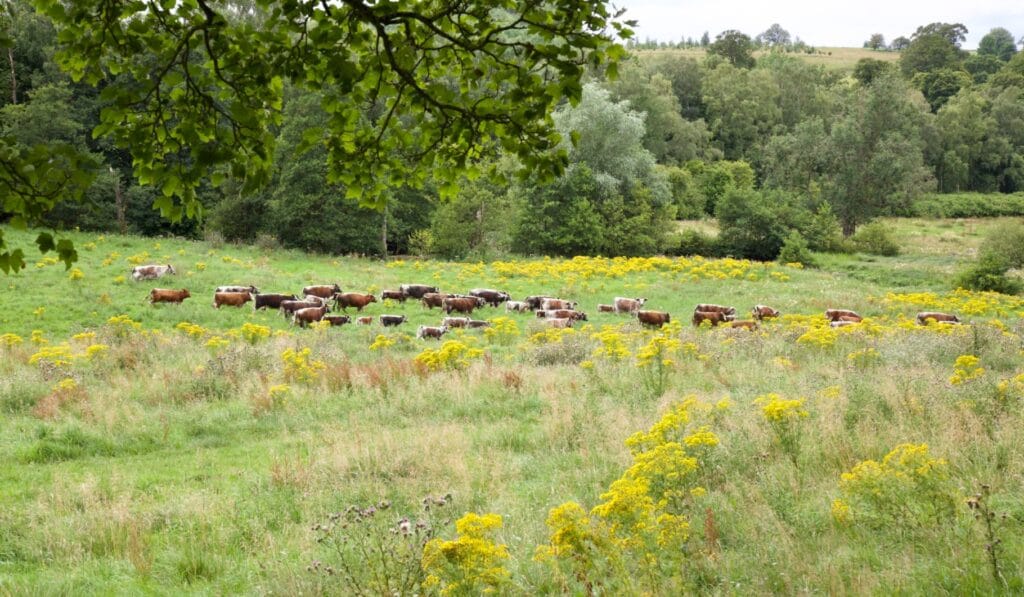
“I’m especially proud of helping to reintroduce longhorn cattle and restore the parkland at Haddon Hall in Derbyshire.”

Ali Rickett, Principal Consultant
“I like bringing people together to find ways of working collaboratively. Human interaction and understanding are key to moving things forward.
“Also of keen interest are hands-on farming practices, landscape change – and how we work with people and the many stakeholders involved within the landscape on these topics.”

Luke Ryder, Senior Consultant
“I’m interested in sustainable land use and how farming systems can balance productivity with environmental outcomes. This includes soil health, nature recovery and the practicalities of transitioning farm businesses under changing policy and market pressures.
“I like the impact that policy can have on the sector, but I especially enjoy work that bridges theory and practice – that translates ambition into something workable on the ground.”
How does your experience in agriculture prove useful at 3Keel?
“It helps enormously,” says Principal Consultant Ali Rickett. “Understanding the practical situations people are dealing with is incredibly valuable.”
Indeed, being able to truly empathise with those working in agriculture is a skill that runs throughout the team, and one they all emphasise and value. “I have lived experience of the challenges that farmers face,” says Catherine McCosker, Head of Agriculture & Landscapes, “from financial and social issues through to practical production challenges.
“I try to bring this perspective to everything I do, and ensure that my work is informed by it. With many things, it can be hard to really understand something if you’ve not experienced it. I think farming falls firmly in that camp.”
Of course, understanding agriculture is just the start.
For Principal Consultant Russell Ashfield, the hands-on knowledge he gained during his previous roles in agriculture proves especially useful. For Russell, “applying practical, on-the-ground experience to schemes and proposals” is essential. Without this “level of reality” and the “bottom-up, muddy-boots creativity” they require, most proposals will never get off paper to see the light of day.
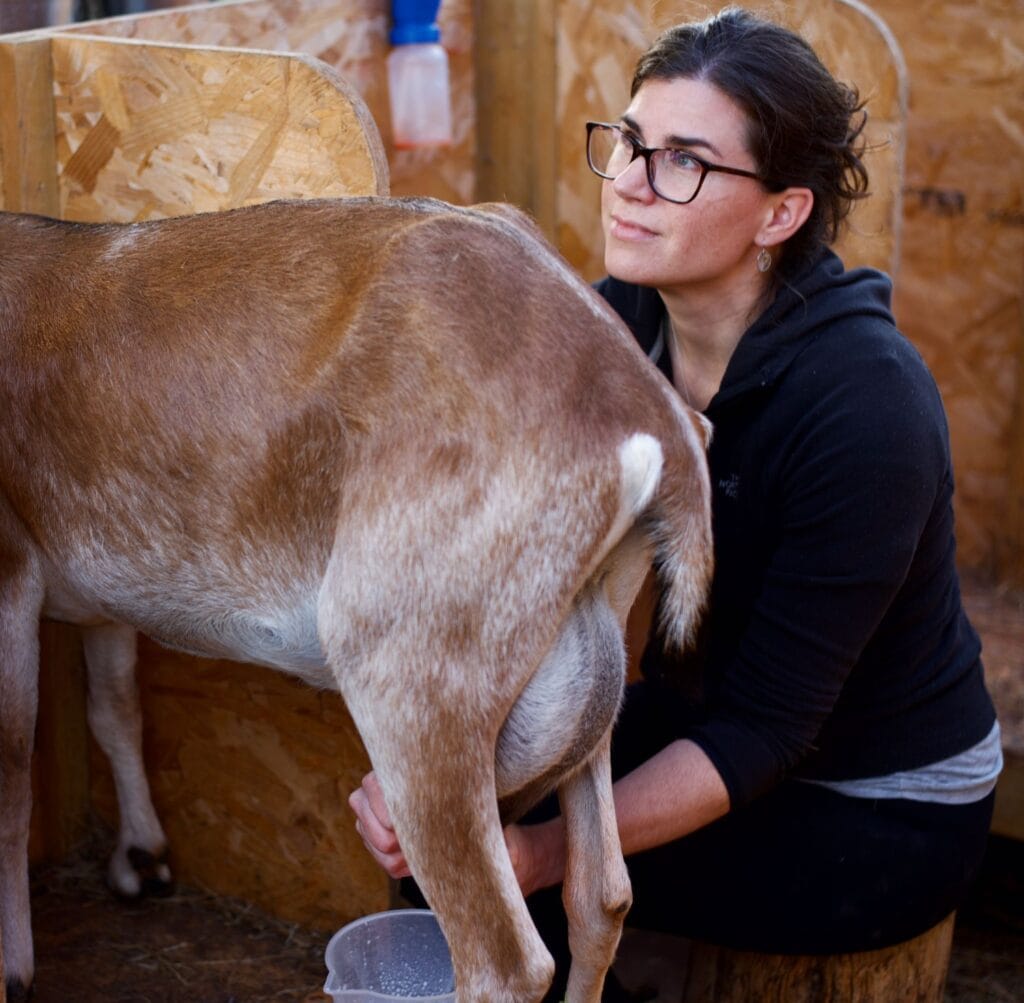
Similarly, Senior Consultant Luke Ryder highlights how his previous experience in agriculture helps him to “stay grounded in reality,” especially given many projects involve strategising and considering hypothetical scenarios.
“It means I’m often thinking about what’s practical, what could create unintended consequences, and how proposals might land with different audiences, such as farmers or land managers,” says Luke.
“I find this perspective really valuable at 3Keel, where I’m often working with businesses who want to disrupt and create change, but who also need solutions that respect how agriculture actually functions today.”
Agriculture is certainly a complex, changing area – full of nuance and potential. But for the team it’s clear that the route to success lies in empathy and understanding. “We need to listen carefully, put ourselves in other people’s shoes,” says Ali, “and then walk beside them to find solutions and deliver accordingly.”
Connecting experience in agriculture with supply-chain expertise
To be really successful, any programme seeking to improve resilience in the supply chain must work for all parties. That’s easier said than done, however.
”The worlds of agriculture and the corporate supply chain can speak very different languages,” says Catherine. “A lot of the time, it feels like our job is to support building relationships and programmes by ‘translating’. We use our experience in both areas to ensure that we ground our work and our advice in reality, and that we consider the very real challenges that both sectors face.”
For Luke, there’s a broader point here too. As he sees it, the team does a particularly good job of consolidating different client needs into a coherent, overarching picture. “By carrying learning from one project into the next, the team is constantly developing its thinking and staying abreast of changes across agriculture, policy and supply chains,” he says. “I think this is really significant.”
The ability to join up dots that others may not see is a definite theme. “The team brings together expertise and previous connections across agriculture and associated supply chains really well,” says Ali. “We link ideas and ways of working, we bring people together where needed for clients and project delivery – and all the while we’re also generating innovation and developing new ways to tackle problems for clients.”
For Russell, it comes back to the practical know-how within the team. “It’s partly because we’re able to talk to supply chain partners and make use of our hands-on experience, that’s how we can create programmes that work for all parties,” he says. “It’s because we listen carefully to their needs and requirements, and we can provide genuine, practical advice that you can implement.”
What makes the Agriculture & Landscapes team stand out?
“Creative thinking to solve real-world problems – that’s what we do well,” says Russell. “We’re able to draw upon a wealth of practical experience to create, test and ultimately implement real solutions to the benefit of farmers, land managers, environment and wider society. And that’s really important.”
There’s no denying the huge range of experience and expertise within the Agriculture & Landscapes team, from knowledge of practical agriculture and land management through to supply chain know-how and analytical abilities. In some ways, however, it’s tying all this together that’s the real skill.
As Catherine puts it: “The team balances a really in-depth knowledge of the environmental issues facing agriculture (climate, nature, water) and the need to address them across the supply chain, with a keen understanding of the realities of farm businesses and food production requirements.”
Catherine’s not the only one to note the delicate balance the work requires. “I see the team as the pivot point between corporate ambition and what can realistically be delivered on the ground,” says Luke. “We play a crucial role in translating high-level aspirations into practical decisions – identifying where change is genuinely possible, what potential trade-offs exist, and ultimately where to focus attention.”
This idea of translation is central to the team’s work and its success turns on listening carefully and having an open mind. “Really understanding our clients and their requirements is key,” says Ali.
“Then we can pull the knowledge together from across the team to deliver a quality project. From there, we can tailor-make our response and our support accordingly, and walk with the client at all stages of delivery. That’s what we’re really good at.”
If you’d like to know more about the experience within the team, or if you’re interested in speaking to any of Catherine, Russell, Ali or Luke, please get in touch using the form below – or call the office on +44 1865 236500.