Complacent and underprepared?
On 16 November, the House of Lords National Resilience Committee published Are we ready? Building a culture of resilience. Drawing on nearly 200 pieces of evidence, from ministers, academics such as food policy expert Professor Tim Lang, organisations such as Sustain, and the ambassadors of four Nordic nations, the report asks whether the UK is ready for the risks it faces. The verdict? “The Government appears complacent and the UK is underprepared. We need to move fast to turn things around.”
“The Government appears complacent and the UK is underprepared. We need to move fast to turn things around.”
The scope of the report is broad, covering current challenges from antibiotic and food supply chain dependencies to cyber-attacks and undersea cables. It adds to a growing pile of calls for action, following the Government’s Resilience Action Plan, the National Audit Office‘s September report on food supply-chain resilience, and the new ‘Be Ready’ emergency preparedness campaign.
Lords Committee reports carry weight rather than direct force. The Government aims to respond within two months but is not obliged to accept the recommendations. Even so, the report is a strong indicator of the direction of travel, and several of its call-outs matter directly for our clients in food and pharma.
Threats are no longer hypothetical
The report highlights the rising likelihood of hostile action, armed or cyber, and argues that the public does not have the full picture of the current “sub-threshold” hostility from Russia, China and Iran. The Government, it says, should stop being “squeamish” about telling people straight about the risks that the country faces
Instability in the Middle East has disrupted shipping and pushed up energy prices. Beyond geopolitics, the UK has just had its hottest and driest summer on record, with two-thirds of England and all of Wales in drought and the 2026 arable harvest likely to be one of the worst on record. The interconnected, just-in-time supply chains we have relied on can no longer be taken for granted. As the Committee puts it, emerging threats are no longer distant or hypothetical.
Three asks for business, and the challenges in acting
1. Avoiding the tick-box trap
The ask. The Committee is clear that plans and frameworks are not, by themselves, evidence of preparedness and that business are central to success. Over 80% of critical national infrastructure is privately owned. Two proposals stand out for food and pharma:
- Statutory duties – The committee proposed a three-tier framework with the asks varying depending on criticality, size and risk profile. Businesses essential to national resilience would face legal duties to prepare, the next tier would have requirements written into contracts, and SMEs would get guidance and incentives such as tax reliefs and cheaper insurance.
- Banking-style stress tests. Regular cross-sector stress tests modelled on the financial sector, covering food, water, energy and pharmaceuticals, with businesses taking part.
The Committee has suggested the Government decide which businesses would fall into the top tier with the greatest ask. But with nine retailers supplying most of the UK’s food, the largest grocers and key medicines suppliers look like obvious candidates.
The challenge. The Government currently prefers voluntary business action to statutory duties, and the Committee admits it is unclear who would set stress-test standards. Introducing statutory mandates could ironically create the very same tick-box trap for business’s compliance that the Committee identifies, while voluntary schemes struggle to reach SMEs, half of which experienced a cyber-attack in 2025. Moreover, exercises only help if approached correctly.
2. Self-reliance
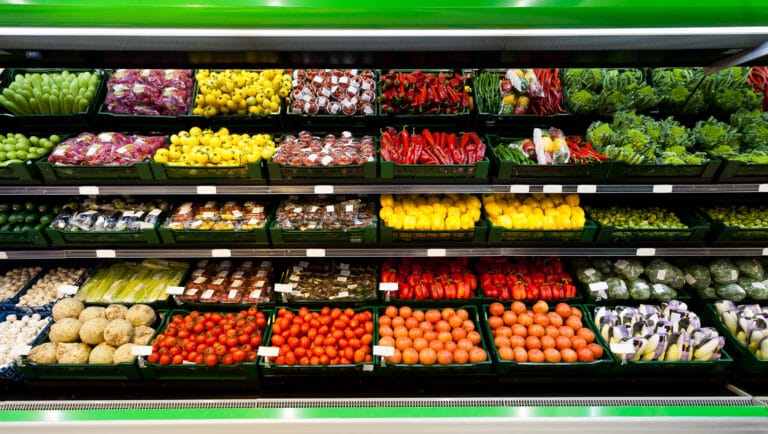
The ask. The Committee finds UK resilience “seriously undermined” by limited domestic production and stockpiles of food and medicines. The UK imports around 40% of its food and 84% of its fresh fruit (Defra), nine retailers supply 94.5% of retail food through 131 hubs, and some commodities hold only two or three days of stock. The Committee calls for strategic reserves of critical inputs such as fertiliser, and stronger domestic production. When the Iran conflict threatened CO2 supplies this spring, the Government paid £100 million to restart a Teesside plant for three months.
In pharma, most active ingredients come from China and India, and the last UK antibiotic plant closed in 2025. The Committee recommends investment in domestic production of key ingredients such as 6-APA, the building block of penicillin, and a review of whether medicine stockpiles would last through prolonged disruption. Suppliers on NHS frameworks must already hold an eight-week buffer of secondary-care medicines, but the Government admits compliance is not universal.
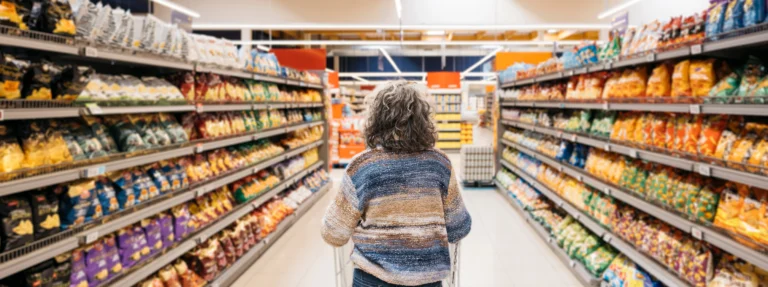
The challenge. Moving from “just-in-time” to “just-in-case” costs money in sectors running on thin margins. For retailers, it is a monumental shift: a lean model built on a few days’ stock and a small number of large hubs would need buffer stock, backup power and alternative routes. Finland has shown what this should look like in practice, with grocers building a network of around 300 shops with backup generators and secure payment systems, so no one in a city is more than 50km from an open shop.
Moving from “just-in-time” to “just-in-case” costs money in sectors running on thin margins.
For pharma, the barrier is also price. Two-thirds of NHS generic medicines cost less than half a first-class stamp for a month’s supply, pushing manufacturers to use the cheapest ingredients available globally. The Committee highlights Germany’s approach, where some antibiotic contracts are reserved for EU-sourced ingredients. Medicines UK told the Committee, we will likely never manufacture everything here so that poses the question – where are we comfortable sourcing from?
we will likely never manufacture everything here so that poses the question – where are we comfortable sourcing from?
3. From silos to systems
The ask. Planning is still organised “in silos” around individual risks and sectors. Getting people to work across system boundaries is difficult. Inside Government, the “lead department” model assigns each risk to a primary owner, which the Committee highlights as a challenge with risks that cut across departments and their competing priorities.
The Committee wants national risk assessments and exercises to test interconnected scenarios, and recommends that the Government begin sharing threat intelligence with critical infrastructure operators. In Norway, they proactively do not separate industry, civil society and defence, recognising their interconnected nature.
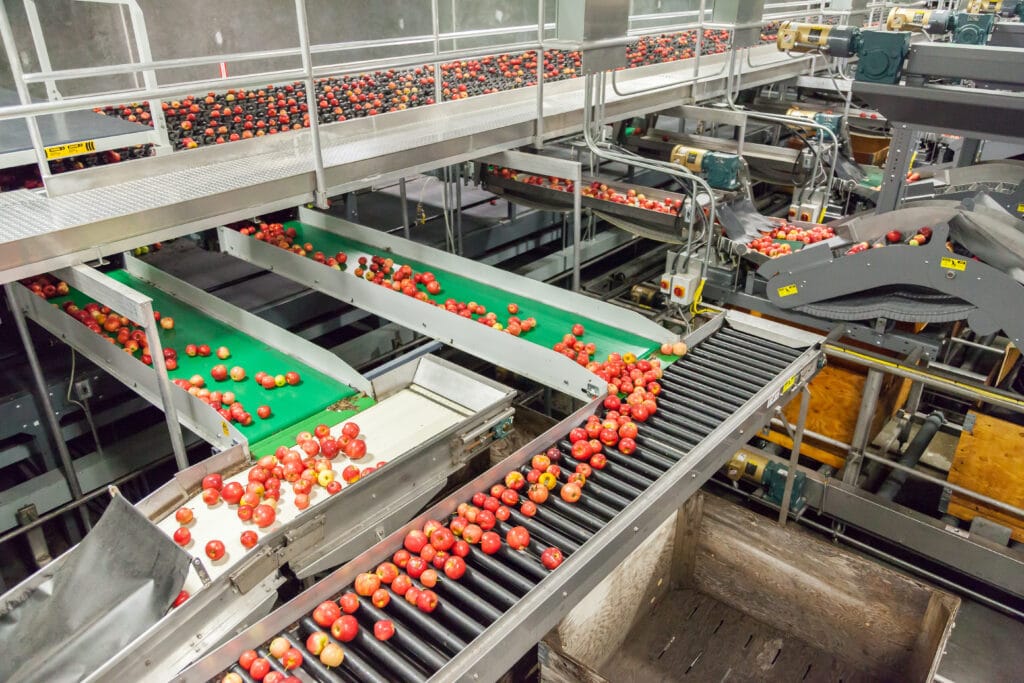
The challenge. Our food system cannot function in isolation. In July, 2 Sisters’ Willand poultry plant in Devon halted production for two days when heatwave demand forced South West Water to restrict supply. In October and November, hackers remotely heated supermarket fridges across France and Europe through internet-linked controllers, spoiling food in hundreds of stores. As we have experienced, connected equipment that supports energy efficiency creates a vulnerability for attackers to exploit. Food and pharma are complex systems, and resilience is a classic “wicked problem”, a fix in one place can create a problem elsewhere.
Creating the business case for long-term resilience in a climate of short-term incentives is challenging. For supply chain resilience within our food systems, collaborative efforts are critical for maximum impact. However, competitors are wary of revealing weak points to each other and their customers, and competition law adds a further barrier.
Under the Competition Act 1998, rivals generally cannot share commercially sensitive information such as stock levels. In the height of Covid, the Government temporarily relaxed those rules so supermarkets could share stock data, distribution depots and delivery vans to keep the nation fed. But that cover came only once the crisis hit, and it excluded joint planning for the future. Working together to prepare, rather than to respond, remains a legal grey area.
Don’t wait for the Government response
The Government’s formal response is due in the new year, and many recommendations may be softened or rejected. But the direction of travel is clear: more stress-testing, more scrutiny of supply-chain dependencies, and higher expectations of business. For retailers, that could mean knowing how many days’ cover they really hold and what fails first when power, water, CO2 or digital systems go down. For pharma, it could mean testing buffer stocks against prolonged disruption and understanding where active ingredient sourcing is concentrated.
Businesses that build resilience that works in practice, rather than on paper, will be ahead of any new requirements, and better placed when the next shock arrives. As the Committee notes, preparing costs less than recovering.
At 3Keel, we recognise the interconnectedness of the challenges that many businesses face in being ‘resilient’. There is a pressing need to act practically and immediately, while also designing and building new systems that are fit for the future. Across our work on risk and resilience, we pursue these parallel demands. With IGD, we have built a new risk capability tool that helps businesses in the food sector get to grips with resilience and provides tailored actions to guide their immediate work. We are also working actively with our clients to assess their risks, improve their supply chain traceability, and develop comprehensive roadmaps to enhance their resilience. Meanwhile, we are proud that Landscape Enterprise Networks (LENs) continues to scale and bring organisations together to co-fund landscape resilience across the UK, Europe and Australia. LENs offers an innovative approach for how we interact with and utilise our landscapes, while regenerating and preserving them for future generations. And, our place-based resilience and system-level work doesn’t stop there. We are also actively working with businesses, government and civic society in a variety of locales to design new systems that put a resilient and more sustainable society at their core.
There is a pressing need to act practically and immediately, while also designing and building new systems that are fit for the future.